Search results: 100
Fundamentals of Biology 1 is a Grade 8 course that meets twice a week, with one additional independent learning activity. It introduces students to foundational biological concepts and scientific thinking, and carries one unit of credit. The course includes eight 100-minute laboratory sessions distributed across the school year.
Biology 1 introduces students to the foundational concepts of biology by exploring life’s defining characteristics, unifying themes, and the processes that govern biological systems. It begins with an overview of biology as a scientific discipline, emphasizing inquiry skills, scientific methods, and laboratory investigations. The first half of the course covers the nature and characteristics of life, including cellular organization, energy processing, homeostasis, and heredity. Evolution and biological classification are then introduced, establishing connections between the diversity of life and mechanisms of evolutionary change. The second half of the course focuses on microscopy, cellular biology, and the diversity of prokaryotic and eukaryotic life forms. It concludes with ecology and environmental awareness, encouraging students to understand and actively engage in addressing ecological issues and climate change. This course sets the foundation for advanced biological studies by building scientific thinking, observation, and analysis skills while cultivating environmental responsibility.
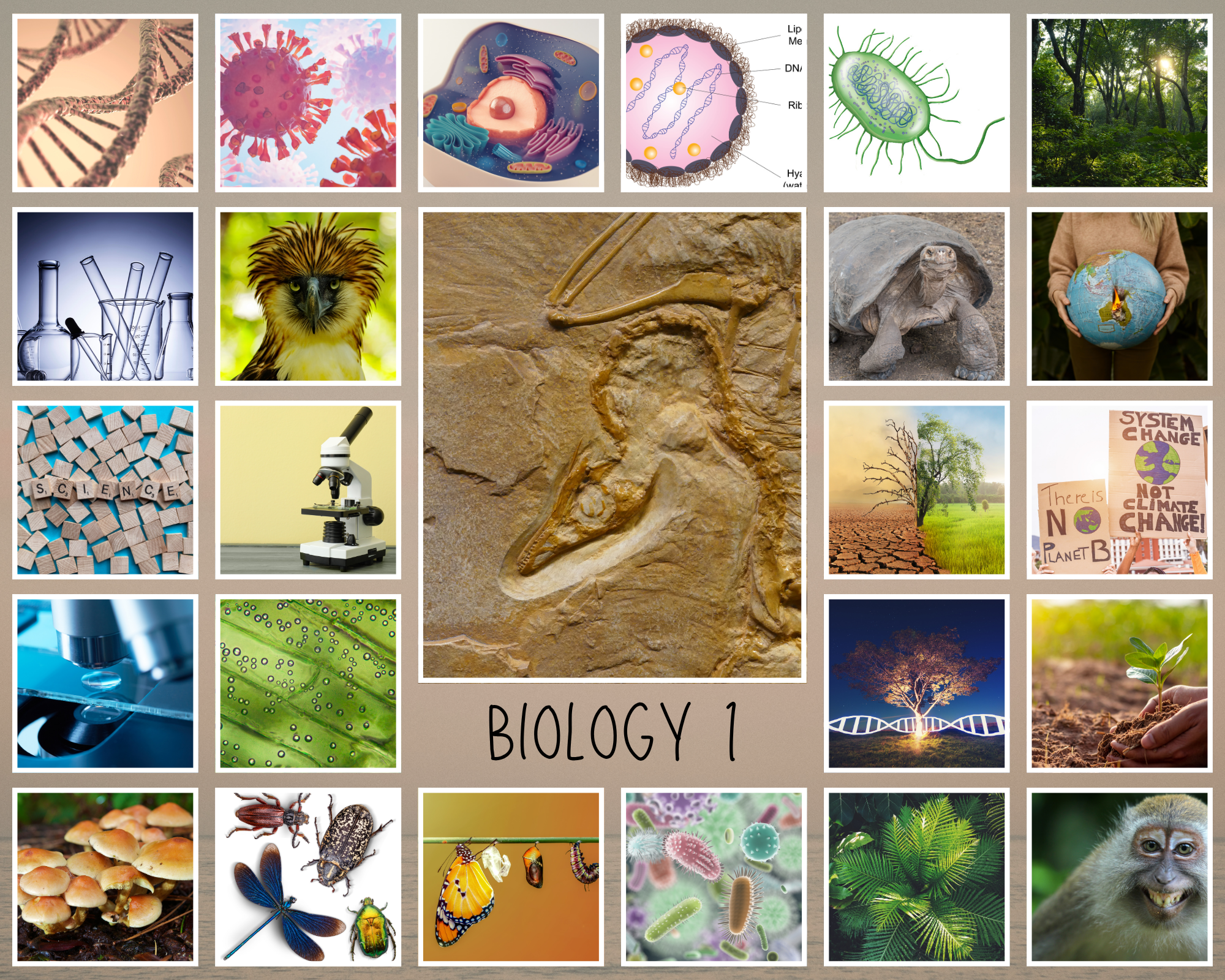 Fundamentals of Biology 1 is a Grade 8 course that meets twice a week, with one additional independent
learning activity. It introduces students to foundational biological concepts and scientific thinking, and carries
one unit of credit. The course includes eight 100-minute laboratory sessions distributed across the school year.
Fundamentals of Biology 1 is a Grade 8 course that meets twice a week, with one additional independent
learning activity. It introduces students to foundational biological concepts and scientific thinking, and carries
one unit of credit. The course includes eight 100-minute laboratory sessions distributed across the school year.
Biology 1 introduces students to the foundational concepts of biology by exploring life’s defining characteristics, unifying themes, and the processes that govern biological systems. It begins with an overview of biology as a scientific discipline, emphasizing inquiry skills, scientific methods, and laboratory investigations. The first half of the course covers the nature and characteristics of life, including cellular organization, energy processing, homeostasis, and heredity. Evolution and biological classification are then introduced, establishing connections between the diversity of life and mechanisms of evolutionary change. The second half of the course focuses on microscopy, cellular biology, and the diversity of prokaryotic and eukaryotic life forms. It concludes with ecology and environmental awareness, encouraging students to understand and actively engage in addressing ecological issues and climate change. This course sets the foundation for advanced biological studies by building scientific thinking, observation, and analysis skills while cultivating environmental responsibility.
Fundamentals of Biology 1 is a Grade 8 course that meets twice a week, with one additional independent learning activity. It introduces students to foundational biological concepts and scientific thinking, and carries one unit of credit. The course includes eight 100-minute laboratory sessions distributed across the school year.
Biology 1 introduces students to the foundational concepts of biology by exploring life’s defining characteristics, unifying themes, and the processes that govern biological systems. It begins with an overview of biology as a scientific discipline, emphasizing inquiry skills, scientific methods, and laboratory investigations. The first half of the course covers the nature and characteristics of life, including cellular organization, energy processing, homeostasis, and heredity. Evolution and biological classification are then introduced, establishing connections between the diversity of life and mechanisms of evolutionary change. The second half of the course focuses on microscopy, cellular biology, and the diversity of prokaryotic and eukaryotic life forms. It concludes with ecology and environmental awareness, encouraging students to understand and actively engage in addressing ecological issues and climate change. This course sets the foundation for advanced biological studies by building scientific thinking, observation, and analysis skills while cultivating environmental responsibility
Chemistry 1 (General Inorganic Chemistry 1) is a one-unit course designed to develop the critical thinking, creativity, collaboration, and communication skills of Grade 9 students in their pursuit of scientific knowledge. These skills are essential as they hone their scientific attitude in the classroom, in the laboratory, at home, or anywhere they go as they find answers to questions or solutions to problems.
At the end of the course, the students are expected to have developed the following:
mastery of basic chemistry principles
ability to design and/ or conduct experiments that require the use of general chemistry laboratory glassware and instruments
problem-solving and manipulative skills (laboratory and mathematical/calculation) that are necessary to prepare them for advanced chemistry subjects
Chemistry 2 (General Inorganic Chemistry 2) is a one (1) unit subject for Grade 10 students at Philippine Science High School. Chemistry 2 introduces the topics in Inorganic Chemistry, which includes thermochemistry, chemical kinetics, chemical equilibrium, chemistry of acids and bases, and electrochemistry.
Chemistry 2 (General Inorganic Chemistry 2) is a one (1) unit subject for Grade 10 students at Philippine Science High School. Chemistry 2 introduces the topics in Inorganic Chemistry, which includes thermochemistry, chemical kinetics, chemical equilibrium, chemistry of acids and bases, and electrochemistry.
Chemistry 2 (General Inorganic Chemistry 2) is a one (1) unit subject for Grade 10 students at Philippine Science High School. Chemistry 2 introduces the topics in Inorganic Chemistry, which includes thermochemistry, chemical kinetics, chemical equilibrium, chemistry of acids and bases, and electrochemistry.
Chemistry 2 (General Inorganic Chemistry 2) is a one (1) unit subject for Grade 10 students at Philippine Science High School. Chemistry 2 introduces the topics in Inorganic Chemistry, which includes thermochemistry, chemical kinetics, chemical equilibrium, chemistry of acids and bases, and electrochemistry.
This course builds on the essential and develops further the computational thinking skills learned in computer science 1, while exploring ethical considerations, data privacy, cybersecurity, and intellectual property in software development. Scholars will engage in hands-on problem-solving, algorithmic reasoning, and coding exercises, with emphasis on the responsible and ethical use of technology. A key focus of the course that starts in the third quarter, will be on the use of persistent data in software systems, how data is stored, accessed, and protected in computing environments. Students will know the implications of persistent data on privacy, security, and intellectual property, ensuring they understand its significance in real-world applications by creating simple application projects. By the end of the course, scholars will be equipped to apply computational thinking principles while making informed ethical decisions in software development.
Earth Science 1 deepens students’ understanding of Earth as a dynamic system shaped by the flow of energy and the cycling of matter. This course explores the fundamental scientific concepts and principles that describe the interactions and changes within and among Earth’s systems. Also included is the development of the main scientific theories that will explain natural events and environmental issues. The course extends learning to include planets in the solar system and beyond, which in turn supports students to appreciate Earth in the universe. Science concepts are contextualized to encourage critical thinking from students and to put forth informed responses to environmental changes and global issues.
English 1 lays the groundwork for the effective communication skills of students in reading, writing, speaking, listening, and critical viewing. It aims to provide students with meaningful practice in the use of the target language through communicative tasks as they engage with varied modes of discourse as well as literary and non-literary texts from the different parts of the world.
English 1 lays the groundwork for the effective communication skills of students in reading, writing, speaking, listening, and critical viewing. It aims to provide students with meaningful practice in the use of the target language through communicative tasks as they engage with varied modes of discourse as well as literary and non-literary texts from the different parts of the world.
English 2 builds upon students’ communication skills developed from the previous level. It aims to further improve their competence in five macro-skills, including critical reading, analytical thinking, and effective communication, in preparation for their academic pursuits.
Effective Communication I for Pre-University Students is a learner-centered course that reinforces the fundamental communication skills. It is designed to equip the scholars with the listening, speaking, reading, and writing proficiencies required to succeed in the university, giving focus on the process of academic writing.
Ang Filipino 1 ay isang masusing pag-aaral sa wika, na naglalayong linangin ang kasanayan ng mga mag-aaral sa paggamit ng wikang Filipino batay sa mga tuntunin at gamit nito. Tinutukoy at pinag-aaralan ang iba't ibang paksang pangwika, kabilang ang kahulugan, kahalagahan, katangian, tungkulin, antas, at teorya ng wika. Binibigyang-pansin din ang kasaysayan ng wikang pambansa at ang paggamit ng wikang Filipino sa iba’t ibang larangan. Higit pa rito, binibigyang-diin sa kursong ito ang pagkilala sa makabansang identidad na matatagpuan sa mga akdang pampanitikan, gayundin ang pagpapahalaga sa kulturang Pilipino. Sa pamamagitan ng malalim na pag-unawa at masining na paggamit ng wika, naipapakita at naipagmamalaki ng mag-aaral ang kanyang pagiging Pilipino.
Ang Filipino 1 ay isang masusing pag-aaral sa wika, na naglalayong linangin ang kasanayan ng mga mag-aaral sa paggamit ng wikang Filipino batay sa mga tuntunin at gamit nito. Tinutukoy at pinag-aaralan ang iba't ibang paksang pangwika, kabilang ang kahulugan, kahalagahan, katangian, tungkulin, antas, at teorya ng wika. Binibigyang-pansin din ang kasaysayan ng wikang pambansa at ang paggamit ng wikang Filipino sa iba’t ibang larangan. Higit pa rito, binibigyang-diin sa kursong ito ang pagkilala sa makabansang identidad na matatagpuan sa mga akdang pampanitikan, gayundin ang pagpapahalaga sa kulturang Pilipino. Sa pamamagitan ng malalim na pag-unawa at masining na paggamit ng wika, naipapakita at naipagmamalaki ng mag-aaral ang kanyang pagiging Pilipino.
Ang Filipino 1 ay isang masusing pag-aaral sa wika, na naglalayong linangin ang kasanayan ng mga mag-aaral sa paggamit ng wikang Filipino batay sa mga tuntunin at gamit nito. Tinutukoy at pinag-aaralan ang iba't ibang paksang pangwika, kabilang ang kahulugan, kahalagahan, katangian, tungkulin, antas, at teorya ng wika. Binibigyang-pansin din ang kasaysayan ng wikang pambansa at ang paggamit ng wikang Filipino sa iba’t ibang larangan. Higit pa rito, binibigyang-diin sa kursong ito ang pagkilala sa makabansang identidad na matatagpuan sa mga akdang pampanitikan, gayundin ang pagpapahalaga sa kulturang Pilipino. Sa pamamagitan ng malalim na pag-unawa at masining na paggamit ng wika, naipapakita at naipagmamalaki ng mag-aaral ang kanyang pagiging Pilipino.
Ang Filipino 1 ay isang masusing pag-aaral sa wika, na naglalayong linangin ang kasanayan ng mga mag-aaral sa paggamit ng wikang Filipino batay sa mga tuntunin at gamit nito. Tinutukoy at pinag-aaralan ang iba't ibang paksang pangwika, kabilang ang kahulugan, kahalagahan, katangian, tungkulin, antas, at teorya ng wika. Binibigyang-pansin din ang kasaysayan ng wikang pambansa at ang paggamit ng wikang Filipino sa iba’t ibang larangan. Higit pa rito, binibigyang-diin sa kursong ito ang pagkilala sa makabansang identidad na matatagpuan sa mga akdang pampanitikan, gayundin ang pagpapahalaga sa kulturang Pilipino. Sa pamamagitan ng malalim na pag-unawa at masining na paggamit ng wika, naipapakita at naipagmamalaki ng mag-aaral ang kanyang pagiging Pilipino.
LAYUNIN NG KURSO: Ang Filipino 2, KOMUNIKASYON AT ANG PANITIKANG PILIPINO, ay sumasaklaw sa kasanayan sa epektibong pakikipagtalastasan sa pamamagitan ng paglinang sa mga makrong kasanayang sentral sa pakikinig, pagbasa, at panonood. Bibigyan ng tuon ang pag-aaral ang iba't ibang katangian ng mga akdang pampanitikan na iniluwal sa iba't ibang yugto ng kasaysayan ng ating bayan mula sa Panahon ng Pananakop ng mga Amerikano at Hapon, sa Panahon ng Bagong Pagsibol, pagsailalim sa Batas Militar hanggang sa mga sulatin sa kasalukuyang panahon at ang kulturang popular.
Matapos ang pag-aaral ng Filipino 2, ang mag-aaral ay inaasahang magtaglay ng sumusunod na mga kakayahan: (1) Nagagamit ang mga makrong kasanayan sa pagpapahayag ng mga ideya. (2) Natutukoy ang makabansang identidad na nakapaloob sa mga akdang-pampanitikan. (3) Napapahalagahan ang kulturang Pilipino. (4) Naipagmamalaki ang pagiging Pilipino.
Mabibigyan ng sapat na kasanayan at kamulatan ang mga mag-aaral sa pamamagitan ng mga kaalamang pangwika at pampanitikan upang maunawaan at mapahalagahan ang kanilang kultura na magsisilbing gabay sa paghubog ng kanilang katauhan at pagtugon sa mga hamon ng pagbabago ng lipunang kinabibilangan.
KOMUNIKASYON AT ANG PANITIKANG PILIPINO
LAYUNIN NG KURSO: Ang Filipino 2, KOMUNIKASYON AT ANG PANITIKANG PILIPINO, ay sumasaklaw sa kasanayan sa epektibong pakikipagtalastasan sa pamamagitan ng paglinang sa mga makrong kasanayang sentral sa pakikinig, pagbasa, at panonood. Bibigyan ng tuon ang pag-aaral ang iba't ibang katangian ng mga akdang pampanitikan na iniluwal sa iba't ibang yugto ng kasaysayan ng ating bayan mula sa Panahon ng Pananakop ng mga Amerikano at Hapon, sa Panahon ng Bagong Pagsibol, pagsailalim sa Batas Militar hanggang sa mga sulatin sa kasalukuyang panahon at ang kulturang popular.
Matapos ang pag-aaral ng Filipino 2, ang mag-aaral ay inaasahang magtaglay ng sumusunod na mga kakayahan: (1) Nagagamit ang mga makrong kasanayan sa pagpapahayag ng mga ideya. (2) Natutukoy ang makabansang identidad na nakapaloob sa mga akdang-pampanitikan. (3) Napapahalagahan ang kulturang Pilipino. (4) Naipagmamalaki ang pagiging Pilipino.
Mabibigyan ng sapat na kasanayan at kamulatan ang mga mag-aaral sa pamamagitan ng mga kaalamang pangwika at pampanitikan upang maunawaan at mapahalagahan ang kanilang kultura na magsisilbing gabay sa paghubog ng kanilang katauhan at pagtugon sa mga hamon ng pagbabago ng lipunang kinabibilangan.
LAYUNIN NG KURSO: Ang Filipino 2, KOMUNIKASYON AT ANG PANITIKANG PILIPINO, ay sumasaklaw sa kasanayan sa epektibong pakikipagtalastasan sa pamamagitan ng paglinang sa mga makrong kasanayang sentral sa pakikinig, pagbasa, at panonood. Bibigyan ng tuon ang pag-aaral ang iba't ibang katangian ng mga akdang pampanitikan na iniluwal sa iba't ibang yugto ng kasaysayan ng ating bayan mula sa Panahon ng Pananakop ng mga Amerikano at Hapon, sa Panahon ng Bagong Pagsibol, pagsailalim sa Batas Militar hanggang sa mga sulatin sa kasalukuyang panahon at ang kulturang popular.
Matapos ang pag-aaral ng Filipino 2, ang mag-aaral ay inaasahang magtaglay ng sumusunod na mga kakayahan: (1) Nagagamit ang mga makrong kasanayan sa pagpapahayag ng mga ideya. (2) Natutukoy ang makabansang identidad na nakapaloob sa mga akdang-pampanitikan. (3) Napapahalagahan ang kulturang Pilipino. (4) Naipagmamalaki ang pagiging Pilipino.
Mabibigyan ng sapat na kasanayan at kamulatan ang mga mag-aaral sa pamamagitan ng mga kaalamang pangwika at pampanitikan upang maunawaan at mapahalagahan ang kanilang kultura na magsisilbing gabay sa paghubog ng kanilang katauhan at pagtugon sa mga hamon ng pagbabago ng lipunang kinabibilangan.
LAYUNIN NG KURSO: Ang Filipino 2, KOMUNIKASYON AT ANG PANITIKANG PILIPINO, ay sumasaklaw sa kasanayan sa epektibong pakikipagtalastasan sa pamamagitan ng paglinang sa mga makrong kasanayang sentral sa pakikinig, pagbasa, at panonood. Bibigyan ng tuon ang pag-aaral ang iba't ibang katangian ng mga akdang pampanitikan na iniluwal sa iba't ibang yugto ng kasaysayan ng ating bayan mula sa Panahon ng Pananakop ng mga Amerikano at Hapon, sa Panahon ng Bagong Pagsibol, pagsailalim sa Batas Militar hanggang sa mga sulatin sa kasalukuyang panahon at ang kulturang popular.
Matapos ang pag-aaral ng Filipino 2, ang mag-aaral ay inaasahang magtaglay ng sumusunod na mga kakayahan: (1) Nagagamit ang mga makrong kasanayan sa pagpapahayag ng mga ideya. (2) Natutukoy ang makabansang identidad na nakapaloob sa mga akdang-pampanitikan. (3) Napapahalagahan ang kulturang Pilipino. (4) Naipagmamalaki ang pagiging Pilipino.
Mabibigyan ng sapat na kasanayan at kamulatan ang mga mag-aaral sa pamamagitan ng mga kaalamang pangwika at pampanitikan upang maunawaan at mapahalagahan ang kanilang kultura na magsisilbing gabay sa paghubog ng kanilang katauhan at pagtugon sa mga hamon ng pagbabago ng lipunang kinabibilangan.
FILIPINO 2 – GRADE 8
KOMUNIKASYON AT ANG PANITIKANG PILIPINO
LAYUNIN NG KURSO: Ang Filipino 2, KOMUNIKASYON AT ANG PANITIKANG PILIPINO, ay sumasaklaw sa kasanayan sa epektibong pakikipagtalastasan sa pamamagitan ng paglinang sa mga makrong kasanayang sentral sa pakikinig, pagbasa, at panonood. Bibigyan ng tuon ang pag-aaral ang iba't ibang katangian ng mga akdang pampanitikan na iniluwal sa iba't ibang yugto ng kasaysayan ng ating bayan mula sa Panahon ng Pananakop ng mga Amerikano at Hapon, sa Panahon ng Bagong Pagsibol, pagsailalim sa Batas Militar hanggang sa mga sulatin sa kasalukuyang panahon at ang kulturang popular.
Matapos ang pag-aaral ng Filipino 2, ang mag-aaral ay inaasahang magtaglay ng sumusunod na mga kakayahan: (1) Nagagamit ang mga makrong kasanayan sa pagpapahayag ng mga ideya. (2) Natutukoy ang makabansang identidad na nakapaloob sa mga akdang-pampanitikan. (3) Napapahalagahan ang kulturang Pilipino. (4) Naipagmamalaki ang pagiging Pilipino.
Mabibigyan ng sapat na kasanayan at kamulatan ang mga mag-aaral sa pamamagitan ng mga kaalamang pangwika at pampanitikan upang maunawaan at mapahalagahan ang kanilang kultura na magsisilbing gabay sa paghubog ng kanilang katauhan at pagtugon sa mga hamon ng pagbabago ng lipunang kinabibilangan.
FILIPINO 2 – GRADE 8
KOMUNIKASYON AT ANG PANITIKANG PILIPINO
LAYUNIN NG KURSO: Ang Filipino 2, KOMUNIKASYON AT ANG PANITIKANG PILIPINO,
ay sumasaklaw sa kasanayan sa epektibong pakikipagtalastasan sa
pamamagitan ng paglinang sa mga makrong kasanayang sentral sa pakikinig,
pagbasa, at panonood. Bibigyan ng tuon ang pag-aaral ang iba't ibang
katangian ng mga akdang pampanitikan na iniluwal sa iba't ibang yugto ng
kasaysayan ng ating bayan mula sa Panahon ng Pananakop ng mga Amerikano
at Hapon, sa Panahon ng Bagong Pagsibol, pagsailalim sa Batas Militar
hanggang sa mga sulatin sa kasalukuyang panahon at ang kulturang
popular.
Matapos ang pag-aaral ng Filipino 2, ang mag-aaral ay inaasahang magtaglay ng sumusunod na mga kakayahan: (1) Nagagamit ang mga makrong kasanayan sa pagpapahayag ng mga ideya. (2) Natutukoy ang makabansang identidad na nakapaloob sa mga akdang-pampanitikan. (3) Napapahalagahan ang kulturang Pilipino. (4) Naipagmamalaki ang pagiging Pilipino.
Mabibigyan ng sapat na kasanayan at kamulatan ang mga mag-aaral sa pamamagitan ng mga kaalamang pangwika at pampanitikan upang maunawaan at mapahalagahan ang kanilang kultura na magsisilbing gabay sa paghubog ng kanilang katauhan at pagtugon sa mga hamon ng pagbabago ng lipunang kinabibilangan.
FILIPINO 2 – GRADE 8
KOMUNIKASYON AT ANG PANITIKANG PILIPINO
LAYUNIN NG KURSO: Ang Filipino 2, KOMUNIKASYON AT ANG PANITIKANG PILIPINO,
ay sumasaklaw sa kasanayan sa epektibong pakikipagtalastasan sa
pamamagitan ng paglinang sa mga makrong kasanayang sentral sa pakikinig,
pagbasa, at panonood. Bibigyan ng tuon ang pag-aaral ang iba't ibang
katangian ng mga akdang pampanitikan na iniluwal sa iba't ibang yugto ng
kasaysayan ng ating bayan mula sa Panahon ng Pananakop ng mga Amerikano
at Hapon, sa Panahon ng Bagong Pagsibol, pagsailalim sa Batas Militar
hanggang sa mga sulatin sa kasalukuyang panahon at ang kulturang
popular.
Matapos ang pag-aaral ng Filipino 2, ang mag-aaral ay inaasahang magtaglay ng sumusunod na mga kakayahan: (1) Nagagamit ang mga makrong kasanayan sa pagpapahayag ng mga ideya. (2) Natutukoy ang makabansang identidad na nakapaloob sa mga akdang-pampanitikan. (3) Napapahalagahan ang kulturang Pilipino. (4) Naipagmamalaki ang pagiging Pilipino.
Mabibigyan ng sapat na kasanayan at kamulatan ang mga mag-aaral sa pamamagitan ng mga kaalamang pangwika at pampanitikan upang maunawaan at mapahalagahan ang kanilang kultura na magsisilbing gabay sa paghubog ng kanilang katauhan at pagtugon sa mga hamon ng pagbabago ng lipunang kinabibilangan.
FILIPINO 2 – GRADE 8
KOMUNIKASYON AT ANG PANITIKANG PILIPINO
LAYUNIN NG KURSO: Ang Filipino 2, KOMUNIKASYON AT ANG PANITIKANG PILIPINO, ay sumasaklaw sa kasanayan sa epektibong pakikipagtalastasan sa pamamagitan ng paglinang sa mga makrong kasanayang sentral sa pakikinig, pagbasa, at panonood. Bibigyan ng tuon ang pag-aaral ang iba't ibang katangian ng mga akdang pampanitikan na iniluwal sa iba't ibang yugto ng kasaysayan ng ating bayan mula sa Panahon ng Pananakop ng mga Amerikano at Hapon, sa Panahon ng Bagong Pagsibol, pagsailalim sa Batas Militar hanggang sa mga sulatin sa kasalukuyang panahon at ang kulturang popular.
Matapos ang pag-aaral ng Filipino 2, ang mag-aaral ay inaasahang magtaglay ng sumusunod na mga kakayahan: (1) Nagagamit ang mga makrong kasanayan sa pagpapahayag ng mga ideya. (2) Natutukoy ang makabansang identidad na nakapaloob sa mga akdang-pampanitikan. (3) Napapahalagahan ang kulturang Pilipino. (4) Naipagmamalaki ang pagiging Pilipino.
Mabibigyan ng sapat na kasanayan at kamulatan ang mga mag-aaral sa pamamagitan ng mga kaalamang pangwika at pampanitikan upang maunawaan at mapahalagahan ang kanilang kultura na magsisilbing gabay sa paghubog ng kanilang katauhan at pagtugon sa mga hamon ng pagbabago ng lipunang kinabibilangan.
Fundamental Physics 1 is designed to introduce formal definitions of physical quantities and familiarize students with basic problem solving while giving a strong foundation in the fundamental concepts and principles in Physics. The course covers topics mainly on Mechanics, specifically motion, forces, energy and momentum, and is taught through active and experiential learning.
This foundational chemistry course introduces students to the essential principles that govern chemical behavior and transformations. Through the study of chemical reactions, students explore the theoretical foundations of processes observed in both natural and laboratory settings.
The course examines the electronic structure of atoms and the periodic trends that arise from it, enabling learners to predict the properties and reactivity of elements. Students also gain an understanding of nuclear science by analyzing nuclear reactions and exploring the principles of radioactive decay. Emphasis is placed on chemical bonding and its role in determining molecular structure and behavior. Throughout the course, students make meaningful connections between chemical concepts and real-world applications, recognizing the relevance and impact of chemistry in everyday life and scientific inquiry.
Course Title: Health 1: Me and Myself - Growth and Development, Mental and Emotional Health
Course Description:
Health 1 is a one-year course that focuses on the changes in all the dimensions of health, with emphasis on growth and development, nutrition, hygiene, mental and emotional health problems, and high-risk practices during adolescence.
Course Title: Health 1: Me and Myself - Growth and Development, Mental and Emotional Health
Course Description:
Health 1 is a one-year course that focuses on the changes in all the dimensions of health, with emphasis on growth and development, nutrition, hygiene, mental and emotional health problems, and high-risk practices during adolescence.
Course Title: Health 1: Me and Myself - Growth and Development, Mental and Emotional Health
Course Description:
Health 1 is a one-year course that focuses on the changes in all the dimensions of health, with emphasis on growth and development, nutrition, hygiene, mental and emotional health problems, and high-risk practices during adolescence.
Course Title: Health 1: Me and Myself - Growth and Development, Mental and Emotional Health
Course Description:
Health 1 is a one-year course that focuses on the changes in all the dimensions of health, with emphasis on growth and development, nutrition, hygiene, mental and emotional health problems, and high-risk practices during adolescence.
Course Title: Health 1: Me and Myself - Growth and Development, Mental and Emotional Health
Course Description:
Health 1 is a one-year course that focuses on the changes in all the dimensions of health, with emphasis on growth and development, nutrition, hygiene, mental and emotional health problems, and high-risk practices during adolescence.
Course Title: Health 1: Me and Myself - Growth and Development, Mental and Emotional Health
Course Description:
Health 1 is a one-year course that focuses on the changes in all the dimensions of health, with emphasis on growth and development, nutrition, hygiene, mental and emotional health problems, and high-risk practices during adolescence.
Course Title: Health 1: Me and Myself - Growth and Development, Mental and Emotional Health
Course Description:
Health 1 is a one-year course that focuses on the changes in all the dimensions of health, with emphasis on growth and development, nutrition, hygiene, mental and emotional health problems, and high-risk practices during adolescence.
Course Title: Health 1: Me and Myself - Growth and Development, Mental and Emotional Health
Course Description:
Health 1 is a one-year course that focuses on the changes in all the dimensions of health, with emphasis on growth and development, nutrition, hygiene, mental and emotional health problems, and high-risk practices during adolescence.
Course Title: Me and My Family: Family Health and Preventive Drug Education
Course Description:
Health 2 is a one-year course that focuses on the changes in all the dimensions of health :
- with emphasis on Family Health and Disease Prevention.
- Family Health focuses on gender and human sexuality, teenage concerns in sexuality,
- relationships, and responsible parenthood.
- Preventive Drug Education focuses on the proper use of over-the-counter and prescription
- drugs, alcohol, tobacco, controlled and illegal drugs, resistance skills, laws, and policies to
- prevent the misuse and abuse of substances.
Course Title: Me and My Family: Family Health and Preventive Drug Education
Course Description:
Health 2 is a one-year course that focuses on the changes in all the dimensions of health :
- with emphasis on Family Health and Disease Prevention.
- Family Health focuses on gender and human sexuality, teenage concerns in sexuality,
- relationships, and responsible parenthood.
- Preventive Drug Education focuses on the proper use of over-the-counter and prescription
- drugs, alcohol, tobacco, controlled and illegal drugs, resistance skills, laws, and policies to
- prevent the misuse and abuse of substances.
Course Title: Me and My Family: Family Health and Preventive Drug Education
Course Description:
Health 2 is a one-year course that focuses on the changes in all the dimensions of health :
- with emphasis on Family Health and Disease Prevention.
- Family Health focuses on gender and human sexuality, teenage concerns in sexuality,
- relationships, and responsible parenthood.
- Preventive Drug Education focuses on the proper use of over-the-counter and prescription
- drugs, alcohol, tobacco, controlled and illegal drugs, resistance skills, laws, and policies to
- prevent the misuse and abuse of substances.
Course Title: Me and My Family: Family Health and Preventive Drug Education
Course Description:
Health 2 is a one-year course that focuses on the changes in all the dimensions of health :
- with emphasis on Family Health and Disease Prevention.
- Family Health focuses on gender and human sexuality, teenage concerns in sexuality,
- relationships, and responsible parenthood.
- Preventive Drug Education focuses on the proper use of over-the-counter and prescription
- drugs, alcohol, tobacco, controlled and illegal drugs, resistance skills, laws, and policies to
- prevent the misuse and abuse of substances.
Course Title: Me and My Family: Family Health and Preventive Drug Education
Course Description:
Health 2 is a one-year course that focuses on the changes in all the dimensions of health :
- with emphasis on Family Health and Disease Prevention.
- Family Health focuses on gender and human sexuality, teenage concerns in sexuality,
- relationships, and responsible parenthood.
- Preventive Drug Education focuses on the proper use of over-the-counter and prescription
- drugs, alcohol, tobacco, controlled and illegal drugs, resistance skills, laws, and policies to
- prevent the misuse and abuse of substances.
Course Title: Me and My Family: Family Health and Preventive Drug Education
Course Description:
Health 2 is a one-year course that focuses on the changes in all the dimensions of health :
- with emphasis on Family Health and Disease Prevention.
- Family Health focuses on gender and human sexuality, teenage concerns in sexuality,
- relationships, and responsible parenthood.
- Preventive Drug Education focuses on the proper use of over-the-counter and prescription
- drugs, alcohol, tobacco, controlled and illegal drugs, resistance skills, laws, and policies to
- prevent the misuse and abuse of substances.
Course Title: Me and My Family: Family Health and Preventive Drug Education
Course Description:
Health 2 is a one-year course that focuses on the changes in all the dimensions of health :
- with emphasis on Family Health and Disease Prevention.
- Family Health focuses on gender and human sexuality, teenage concerns in sexuality,
- relationships, and responsible parenthood.
- Preventive Drug Education focuses on the proper use of over-the-counter and prescription
- drugs, alcohol, tobacco, controlled and illegal drugs, resistance skills, laws, and policies to
- prevent the misuse and abuse of substances.
Course Title: Me and My Family: Family Health and Preventive Drug Education
Course Description:
Health 2 is a one-year course that focuses on the changes in all the dimensions of health :
- with emphasis on Family Health and Disease Prevention.
- Family Health focuses on gender and human sexuality, teenage concerns in sexuality,
- relationships, and responsible parenthood.
- Preventive Drug Education focuses on the proper use of over-the-counter and prescription
- drugs, alcohol, tobacco, controlled and illegal drugs, resistance skills, laws, and policies to
- prevent the misuse and abuse of substances.
This course provides an introduction to the core topics in physics through historical development of ideas, confirmation inquiry, and conceptual understanding. Scholars will examine how foundational theories emerged from the work of scientists like Galileo and Newton, among others, while conducting experiments to verify basic principles of motion, energy transfer, wave behavior, and electromagnetism. The course emphasizes qualitative understanding, focusing on real-world applications of concepts like Newton's laws, energy conservation, sound and light waves, and basic electromagnetism.
Get ready to unleash your inner superpowers with Mathematics 4 - a 1.3-unit subject with fantastic four action-packed meetings each week. This mission takes students on an epic journey through the invisible forces of plane geometry, the shifting dimensions of analytic geometry, and the cosmic patterns of trigonometry.
The course intertwines curiosity and precision by employing both an inquiry-based discovery approach and the deductive strength of an axiomatic system. You will get hands-on with manipulatives, construction and graphing tools, and blaze through ICT-powered visualizations of geometric figures and trigonometric functions.
Whether you’re stretching the limits of logic, constructing invisible truths, or setting graphs on fire, this course equips you with the heroic tools to master the mathematical universe.Fundamental Physics 2 is designed as a continuation of Fundamental Physics 1. It covers topics such as Oscillations and Waves, Sound, Light, and Electromagnetism. Upon completion, students should be able to demonstrate an understanding of the principles involved and display analytical problem-solving ability for the topics covered.
This class is handled by Ma'am Manuel.Social Science 1 deals with the study of Philippine History in the context of different schools of thought with emphasis on the Filipino perspective. Specific topics include definition and purpose of studying history, Philippine geography, as well as political, economic, and social and cultural conditions of the country from ancient times to the contemporary period. It also strives to employ methodology in the study of Philippine History which would prepare students to embrace a greater role as conscientious future leaders of the country. To provide broader historical context and regional understanding, the course also incorporates the study of Southeast Asia, examining the interconnectedness of the Philippines with its neighboring countries in terms of colonial experiences, nationalist movements, and post-independence challenges.
Social Science 1 deals with the study of Philippine History in the context of different schools of thought with emphasis on Filipino perspective. Specific topics include definition and purpose of studying history, Philippine geography, as well as political, economic, and social and cultural conditions of the country from ancient times to the contemporary period. It also strives to employ methodology in the study of Philippine History which would prepare students to embrace a greater role as conscientious future leaders of the country. To provide broader historical context and regional understanding, the course also incorporates the study of Southeast Asia, examining the interconnectedness of the Philippines with its neighboring countries in terms of colonial experiences, nationalist movements, and post-independence challenges.
Social Science 1 deals with the study of Philippine History in the context of different schools of thought with emphasis on Filipino perspective. Specific topics include definition and purpose of studying history, Philippine geography, as well as political, economic, and social and cultural conditions of the country from ancient times to the contemporary period. It also strives to employ methodology in the study of Philippine History which would prepare students to embrace a greater role as conscientious future leaders of the country. To provide broader historical context and regional understanding, the course also incorporates the study of Southeast Asia, examining the interconnectedness of the Philippines with its neighboring countries in terms of colonial experiences, nationalist movements, and post-independence challenges.
This course is opened in support of Mr. Crisologo's study in metacognitive supports. Your participation is very highly appreciated.
The course requirements are as follows:
- A non-graded pre-test and post-test on finding volumes of solids of revolution.
- A non-graded pre-test and post-test on your metacognitive strategies.
- Watching five lesson videos (less than 6 minutes each) on finding the volumes of solids of revolution.
- Responding to a preference and impact survey on the tools used in the study.
- Optional interviews about the learning experience.
These lessons are part of the Math 6 Q3 coverage so completing the videos will help prepare you for next quarter.
Gift certificates from vendors of your choice (e.g. Decathlon, Starbucks, Fully Booked, etc.) worth PHP 1000 each will be raffled to those who complete all study requirements.
Thank you very much!
The Course introduces to grade 7 students of PSHS System the concepts of computing, through hands-on activities and independent learning tasks. It prepares the students for higher computer science courses. By the end of this course, students shall be able to demonstrate what it means to be a digital citizen, use different productivity tools for data storytelling, and develop solutions to simple problems by employing computational thinking skills.
As a first in a series of four Values Education (VE) courses, VE 1 advocates for values by advocating for the well-being of the bearers of values – the students. Through VE 1, the new students of the PSHS System are accompanied in the process of experiencing belongingness in school, participating confidently in school life, and liking and valuing oneself and others in school. The values emphasized in this course are: an objective self-knowledge that leads one to be comfortable and confident with oneself; an openness to personal growth that makes school learning constructive and healthy; and, kindness and generosity toward others made effective by one’s astute grasp of persons and situations.
Under the guidance of Ms. Natalie D. Basquez
As a first in a series of four Values Education (VE) courses, VE 1 advocates for values by advocating for the well-being of the bearers of values – the students. Through VE 1, the new students of the PSHS are accompanied in the process of experiencing belongingness in school, participating confidently in school life, and liking and valuing oneself and others in school.
The values emphasized in this course are: an objective self-knowledge that leads one to be comfortable and confident with oneself; an openness to personal growth that makes school learning constructive and healthy; and, kindness and generosity toward others made effective by one’s astute grasp of persons and situations.
As with VE 1, VE 2 concerns young persons as bearers of values. With a growing desire to build their lives in an expanding world, the students develop, through this course, self-deliberation for rendering judgments and decisions on novel, complex, or consequential matters. The meaning or purpose in life is presented not as a choice to be made on the outset, but as an outcome of a process of search and discernment. The values emphasized in this course are: setting one’s life directions from keen observations and memories of events and circumstances; pursuing the good with a methodical approach, a sense of rightness, and a self-disciplined will; and seeking and protecting one’s well-being and wholeness.
Course Objectives
During and at the end of this course, the students are expected to:
1. know the contemporary milieu in which one’s present and future life is situated and assess how the milieu thwarts or promotes one’s dreams and goals;
2. think about and discuss alternative directions in life and the viable approaches to pursuing these directions;
3. discern which personal goals are worth working for and why and be skilled in working out challenges and setbacks in the pursuit of goals;
4. to advocate for one’s mental health and well-being and to build balance and wholeness for the rigors and challenges to come.